You Can Feel the Culture
Football season is almost here.
For me, that means spending entirely too much time reading about teams, watching preseason football, and overanalyzing episodes of Hard Knocks.
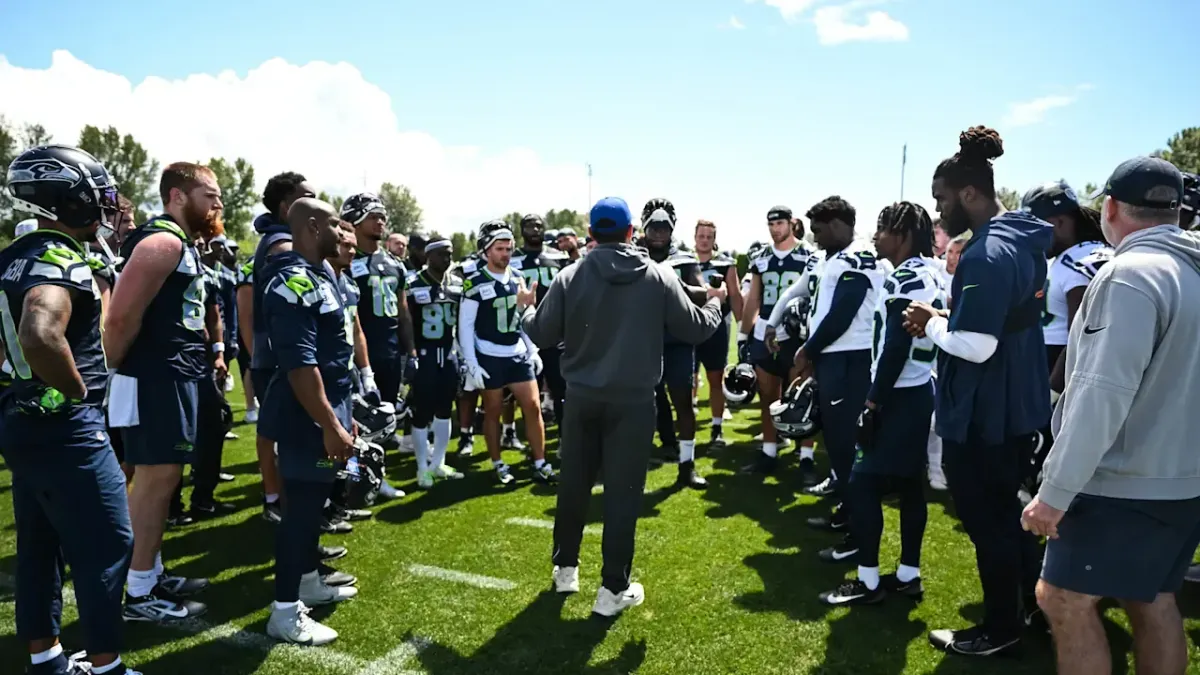
I watched the first episode featuring the Seattle Seahawks, and one thing stood out immediately.
The culture Mike Macdonald has built feels real.
Seattle is coming off a Super Bowl championship. It would be easy for the organization to become comfortable. It would be even easier for the head coach to make the entire thing about himself.
But that wasn’t what I saw.
Macdonald talked to the team about the 1990s Chicago Bulls and how they became champions when everything stopped revolving around one person and the entire team began playing as one.
His message for Seattle is “12 As One.”
Not one superstar.
Not one coach.
Everyone.
He talks about chasing small edges, continuing to evolve, and becoming a new version of the team instead of trying to recreate last season.
But it was a quieter moment that told me the most.
Nick Emmanwori was recovering from an injury and worried about fans seeing him wearing a boot. Macdonald reminded him that the outside noise didn’t matter. What mattered was taking care of himself and getting healthy.
It felt honest.
It felt human.
It felt like a leader who understood the person underneath the helmet.
Then I thought about what has been happening at the University of North Carolina under Bill Belichick.
Let me start here.
Bill Belichick is one of the greatest football coaches of all time. Six Super Bowl championships as a head coach. A football mind very few people can match.
That isn’t really debatable.
But past success does not automatically make someone a great leader in every environment.
UNC went 4 and 8 in his first season. Reports described a divided locker room, poor communication, preferential treatment, and what one source called a “culture of arrogance.”
Belichick says the culture is different entering year two. I hope it is.
But the contrast made me think about something much bigger than football.
Culture is not what the leader puts on the wall.
Culture is how people feel when the leader walks into the room.
I’ll just say it.
Arrogant people are not my favorite.
I don’t enjoy being around them.
I don’t care how successful they are, how much money they make, how many championships they have won, or how impressive their résumé looks.
If someone carries themselves like they are the smartest or most important person in every room, I pull back.
I have done it with leaders I’ve worked for.
I have done it with high-producing loan officers I’ve recruited.
Someone can produce a huge amount of volume and still be wrong for the culture.
Someone can have all the numbers and none of the humility.
I know there are people who believe you have to tolerate the ego because of what that person produces.
I don’t.
Talent matters.
Results matter.
Drive matters.
But how you treat people matters too.
The best leaders I’ve worked with are authentic, passionate, compassionate, and still incredibly driven.
Those things can exist together.
You can demand excellence without making people feel small.
You can hold someone accountable without humiliating them.
You can be confident without believing you are better than everyone around you.
You can win without making everything about yourself.
That is the kind of leadership I thrive under.
It is also the kind of leadership I’m fortunate to work with today.
The leaders around me care deeply about winning. They have high expectations. They want to grow, produce, recruit great people, and build something meaningful.
But they are also real.
They listen.
They laugh.
They admit when they don’t have every answer.
They care about the human being behind the production numbers.
That makes me want to work harder for them.
Not because I’m afraid of disappointing them.
Because I believe in them.
There is a massive difference.
Fear may create compliance.
Authenticity creates commitment.
Arrogance may attract attention.
Humility builds trust.
And talent may win you a few games.
But culture determines whether people want to keep playing for you.
Football season is almost here, and I’ll be watching plenty of it.
But I’ll also be watching the leaders.
How they respond when things go wrong.
How they treat the person at the bottom of the roster.
Whether they absorb the praise and distribute the blame, or distribute the praise and absorb the blame.
You can learn a lot about leadership from football.
And whether it is a locker room, a branch, or an entire company, people can feel the culture.
They always know when it is real.